
The NXP PCF8574T/3518: A Comprehensive Guide to the Remote 8-Bit I/O Expander for I2C-Bus Applications
In the realm of embedded systems and IoT design, a common challenge is the scarcity of General-Purpose Input/Output (GPIO) pins on microcontrollers. As projects increase in complexity, the need to connect more sensors, buttons, LEDs, and other peripherals quickly outstrips the available I/O. This is where I/O expanders become invaluable. Among the most popular and enduring solutions is the PCF8574T/3518 from NXP Semiconductors, a remote 8-bit I/O expander that communicates via the ubiquitous I²C-bus (Inter-Integrated Circuit).
This device acts as a bridge, effectively adding eight quasi-bidirectional GPIO pins to any microcontroller with an I²C interface, using only two MCU pins (SDA and SCL). The 'quasi-bidirectional' nature of its ports is a key feature. Each pin can be used as an input or an output without a dedicated data direction register. Upon power-up, all ports are configured as inputs (high-impedance state). When written to a logic high, a pin can serve as an input; when written to a logic low, it acts as a current-sinking output.
Key Features and Operational Overview
The PCF8574T/3518 is designed for simplicity and ease of use. Its core functionality is managed through a single register, which is both readable and writable. Writing a byte to the device sets the output latch, determining the state of each port (if configured as an output). Reading a byte from the device returns the logic level present on each physical pin, allowing the microcontroller to read the status of input devices.
A critical feature is its interrupt output (INT pin). This open-drain pin activates (goes low) whenever a change of state occurs on any input pin. This allows the expander to signal the master microcontroller asynchronously that an input needs to be serviced, eliminating the need for constant polling and significantly improving system efficiency.
The I²C-bus address of the PCF8574 is set by three address pins (A0, A1, A2), allowing up to eight identical devices to be connected on the same I²C bus, providing a theoretical expansion of 64 I/O lines with minimal wiring.
Typical Application Circuits
A typical use case for the PCF8574 is interfacing with simple input and output devices. For example:
Driving LEDs: The ports can directly sink current to drive LEDs, with an appropriate current-limiting resistor.
Reading Switches: A matrix of buttons or an array of DIP switches can be connected. The INT pin can be used to wake up a microcontroller from sleep mode when a key is pressed.
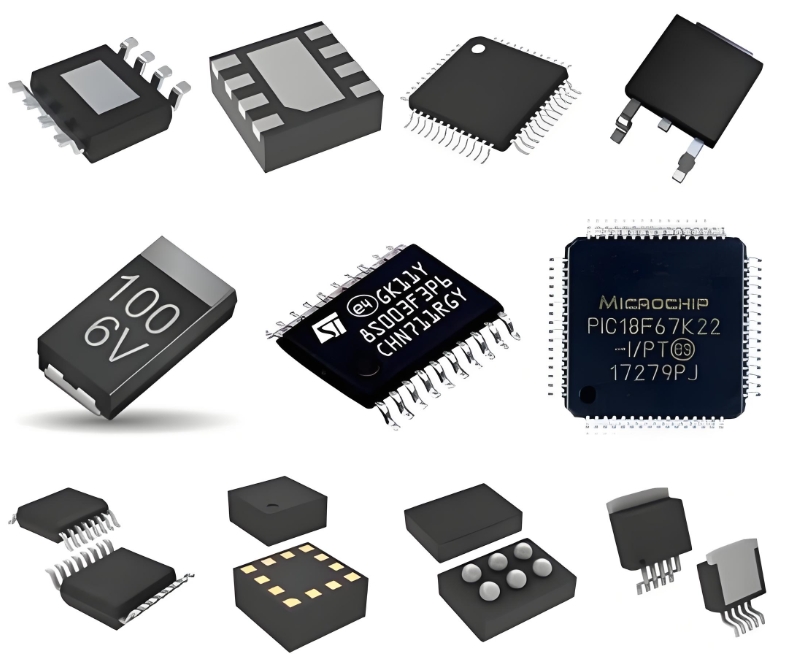
Sensor Reading: It can be used to read the digital on/off status from various sensors.
Advantages and Considerations
The primary advantage of the PCF8574 is its remarkable simplicity. Developers can integrate it into a project with minimal code, often using standard I²C library functions. Its compatibility with virtually any microcontroller that supports I²C makes it a universal solution.
However, designers must be aware of its limitations. The quasi-bidirectional ports have weaker pull-up currents compared to a standard microcontroller's totem-pole output. For driving higher-current devices, external transistors or buffers may be necessary. Furthermore, it operates at standard I²C speeds (up to 100 kHz or 400 kHz in fast mode), which is sufficient for most human-interface and monitoring tasks but may be slow for high-speed data transfer.
Conclusion and ICGOODFIND Summary
The NXP PCF8574T/3518 remains a cornerstone component for embedded designers decades after its introduction. It elegantly solves the problem of I/O limitation with minimal overhead, offering a reliable, cost-effective, and straightforward method for system expansion. Its interrupt functionality and ability to daisy-chain multiple devices make it a versatile choice for a vast array of applications, from industrial control panels to consumer electronics.
ICGOODFIND: The NXP PCF8574T/3518 is a quintessential I²C I/O expander, prized for its simplicity and effectiveness in adding 8 quasi-bidirectional ports. Its integrated interrupt function reduces MCU overhead, and hardware address selection allows for scalable designs, making it an indispensable tool for overcoming GPIO constraints.
Keywords:
1. I²C-bus (I2C)
2. GPIO Expander
3. Quasi-bidirectional Port
4. Interrupt (INT) Output
5. NXP Semiconductors

